
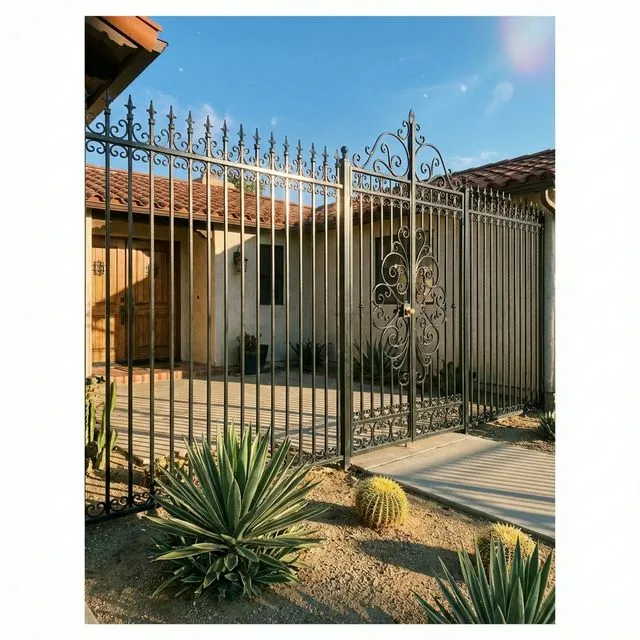
Retaining Wall Fencing in Bakersfield, CA
Bakersfield Quality Fences Fencing on or adjacent to retaining walls requires installation methods that account for the wall structure, the elevated grade, and the specific attachment constraints that masonry or concrete walls present. A fence on top of a retaining wall cannot be installed the same way as a fence in open ground — the post attachment must be engineered for the wall's load-bearing capacity and the fence must not undermine the wall's structural integrity. We install fence systems on and around retaining walls for residential and commercial properties throughout Bakersfield.
If you have a retaining wall that needs a fence along the top or adjacent to it, call or request a quote. We will assess the wall construction type and recommend the appropriate post attachment method before any drilling or anchoring begins.
Retaining Wall Fence Installation in Bakersfield, CA
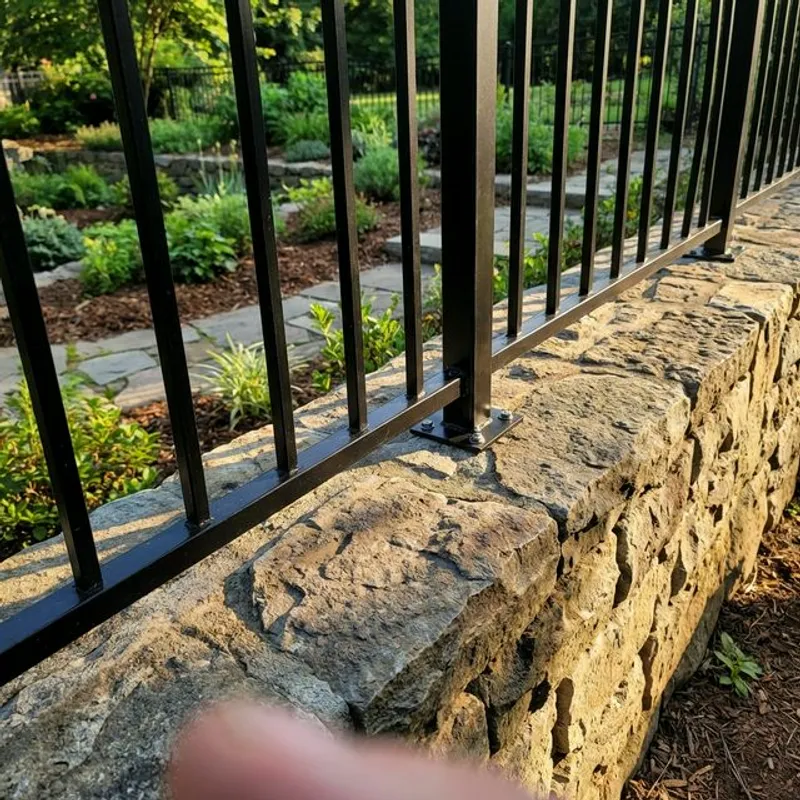
Retaining walls in Bakersfield are commonly built from CMU block, poured concrete, or stacked stone. Each construction type presents different attachment options for fence posts. CMU block walls can be core-drilled to accept post bases set in the block cores with non-shrink grout. Poured concrete walls can be core-drilled for post sleeve anchors. Stone walls typically require surface-mounted post bracket systems that distribute the load across a larger surface area rather than concentrating it at a single anchor point.
The fence above a retaining wall serves both as a safety barrier for the elevated grade and as a boundary or visual screen. Safety barrier function requires the fence to withstand a lateral load from someone leaning or falling against it — which means the post attachment must be engineered for that load, not just adequate for holding the fence upright against wind. We evaluate the wall condition and construction type before selecting an attachment method that meets the structural requirements for the intended fence use.
Core-Drill Post Anchoring
Core drilling through the top of a CMU block or concrete retaining wall allows post sleeve anchors to be set deep into the wall structure, providing strong lateral load resistance for fence posts. This is the preferred method for walls in good structural condition with adequate width at the top for the drill diameter required. Non-shrink grout is packed around the anchor sleeve to ensure full contact with the surrounding masonry, and the grout is allowed to cure fully before any fence load is applied to the posts.
Surface-Mount Post Systems
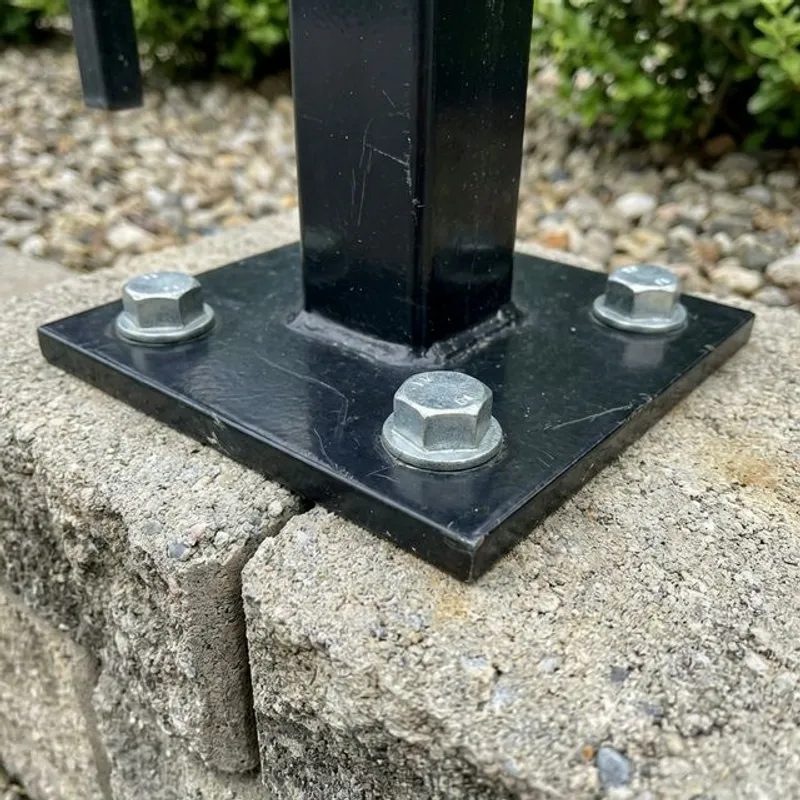
Surface-mount post brackets attach to the top surface of the retaining wall using anchor bolts set into the masonry with epoxy or mechanical anchors. This method does not require core drilling through the wall and is suitable for walls where the top width is insufficient for core-drill anchoring or where the wall condition makes core drilling inadvisable. The bracket system must be sized for the post diameter and the expected lateral fence load, and the anchor bolt pattern must be appropriate for the wall material.
Offset Post Installation
When a retaining wall's structural condition does not support direct post attachment — cracked walls, deteriorating mortar joints, or inadequate wall thickness — offset post installation places the fence posts in the ground behind or in front of the wall rather than on it. The fence panels then step over the wall top using custom-height panels or rail adjustments. This approach avoids loading the wall entirely and is often the most reliable solution on older or deteriorated masonry.
Why Bakersfield Quality Fences for Retaining Wall Fencing
Retaining wall fence installation requires assessment of the wall before any drilling begins. Here is how we approach these projects.
Wall Assessment Before Anchoring
We inspect the retaining wall's construction type, condition, and top width before recommending an attachment method. Drilling into a cracked or deteriorating wall can accelerate damage rather than create a useful attachment. Assessment prevents us from starting an installation approach that the wall cannot support.
Load-Appropriate Hardware
Post anchors on retaining walls must be sized for the combined lateral load of the fence and any safety barrier function requirements. We use anchor bolts, grout volumes, and bracket sizes rated for the fence height and use case rather than the minimum hardware that will hold the post upright in still air.
Safe Installation Practices
Installing fence posts on elevated retaining walls requires working at grade height on one side and below grade on the other. We use appropriate fall protection and stabilization practices when working on elevated wall tops and do not compromise safety to speed up the installation.
Clean Visual Integration
Fence installations on retaining walls are highly visible, often serving as the primary visual element defining a terraced yard or elevated boundary. We plan panel heights, step transitions, and post cap heights to create a uniform appearance across the wall-mounted sections and any ground-mounted sections that continue from the wall.
Safety Barrier Installations
Retaining walls with significant height differences — drops of 30 inches or more — typically require safety barriers under California building code. We install safety fence systems on retaining walls to the applicable code requirements for barrier height and load resistance. Code-required safety barriers must withstand a specific lateral load, which we account for in the anchor specification. We can provide documentation of the installation for permit compliance when required.
Ornamental Iron on Masonry
Ornamental iron fencing on retaining walls is a popular choice for Bakersfield properties where the wall is a designed landscape feature and the fence above it needs to maintain a finished, architectural appearance. The open ornamental iron profiles work well visually with masonry walls and provide the safety barrier function without blocking the view of the wall below. We install ornamental fence panels with post anchoring appropriate for the masonry construction type.
Step Transitions and Mixed-Grade Fencing
Properties with retaining walls often require fence installations that transition between wall-mounted sections and ground-mounted sections at the ends of the wall. These transitions require planning so the fence maintains a consistent top line height or steps in a uniform and intentional way. We plan the transition details during the site visit so the layout is confirmed before materials are ordered.
Retaining Wall Fence Installation Process
Wall Assessment and Method Selection
We inspect the wall construction type, measure the wall top width, and check the wall condition for cracks, joint deterioration, or structural concerns. Based on the assessment, we select the post attachment method — core drill, surface mount, or offset post — that is most appropriate for the wall's structural condition and load requirements. The attachment method is confirmed with the client before any anchoring work begins.
Anchor Layout and Installation
Post anchor positions are marked on the wall with spacing appropriate for the fence panel system being used. Core drilling or anchor bolt setting is done with equipment sized for the hole diameter and depth required. Grout or epoxy is placed and allowed to cure to the specified strength before post sleeves or brackets are loaded. We protect the work area during curing to prevent displacement.
Post Setting and Panel Installation
Posts are set into the anchor sleeves or attached to the surface brackets, plumbed, and secured. Panel installation proceeds from one end of the wall, with level and alignment checked at each bay. At grade transitions between wall-mounted and ground-mounted sections, post heights and panel configurations are adjusted to maintain the planned visual flow.
Gate Integration and Final Check
Where a gate is included in the wall fence layout, the gate post anchoring is specified for the gate weight in addition to the fence lateral load. Gate installation and hardware calibration follow the same process as standard gate installations. We walk the complete installation with the client at completion and confirm attachment security, panel alignment, and gate operation.
Retaining Wall Fencing FAQs
Can any retaining wall support a fence?
Is a permit required for a fence on a retaining wall?
Can core drilling damage the retaining wall?
What fence styles work best on retaining walls?
How do you handle a fence that transitions from on the wall to in the ground?
Ready to Start Your Retaining Wall Fencing Project?
Get a detailed estimate for your retaining wall fencing project in Bakersfield. No pressure, no obligations — just a straight answer on scope, timeline, and cost.