
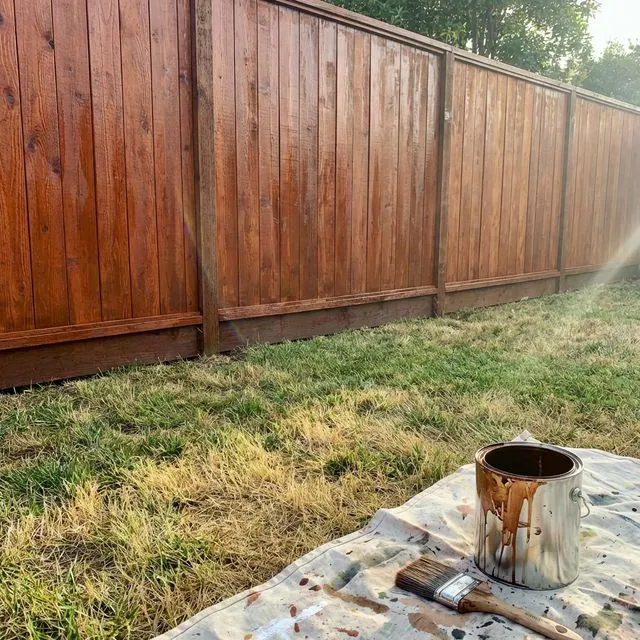
Fence Staining and Sealing in Bakersfield, CA
Bakersfield Quality Fences Bakersfield's UV exposure is among the most intense in California — a wood fence left unprotected after installation will begin to gray and show surface checking within a single season. Staining and sealing with the right products dramatically extends fence life and maintains the appearance that made the fence worth installing in the first place. We apply penetrating oil-based and water-based stains and sealers formulated for high-UV, low-humidity climates to new and existing wood fences throughout Kern County.
If your fence is overdue for staining, starting to gray and check, or showing early signs of UV damage, the best time to address it is before the surface has deteriorated enough to reduce stain absorption. Call or request a quote and we will assess the fence condition and recommend the appropriate treatment.
Fence Staining and Sealing Services for Bakersfield Wood Fences
Staining and sealing wood fencing is not just a cosmetic service — it is the primary defense against the UV degradation, moisture cycling, and surface checking that shorten a wood fence's useful life. In Bakersfield's climate, unprotected cedar and redwood surfaces begin to degrade rapidly. The surface fibers break down under intense UV, the wood dries and checks, and what was a clean fence starts to look weathered and rough within two to three years. A properly applied penetrating stain soaks into the wood fibers and provides UV inhibition from within rather than just coating the surface.
The quality of a stain application depends as much on surface preparation as it does on product selection. Wood that has not been cleaned before staining will trap dirt, mildew, and chalky degraded surface fibers between the wood and the stain, preventing proper absorption and causing the stain to peel or appear blotchy. We clean all fence surfaces before application, check moisture content before applying product, and apply stain evenly with controlled coverage to prevent lapping marks and missed areas.
New Fence Protection
New cedar and redwood fencing should be allowed to dry and acclimate for 2 to 4 weeks before staining, depending on the wood's initial moisture content. Staining too soon traps residual moisture and can cause adhesion problems and premature peeling. We assess the wood's readiness before application and advise on timing if the wood needs additional drying time. A properly timed first application sets up the wood for longer intervals between subsequent treatments.
Weathered Fence Restoration
Fences that have been left untreated for several years develop a gray, oxidized surface that requires cleaning and sometimes light sanding before stain will absorb properly. We use wood cleaners and brighteners to remove oxidation and raise the grain before applying stain. This preparation step is what separates a restoration job that looks genuinely renewed from one that looks like stain was applied over a dirty surface. The restoration approach is viable as long as the wood is structurally sound — surface degradation does not always indicate structural failure.
Maintenance Restaining
Wood fences in Bakersfield typically benefit from restaining every 2 to 4 years depending on the product used, the fence's sun exposure, and whether the fence receives any shade during the hottest part of the day. Oil-based penetrating stains generally need more frequent reapplication than film-forming systems but provide better long-term wood protection in dry climates. We track the products used on each project and can provide maintenance reminders so your fence gets retreated at the right interval.
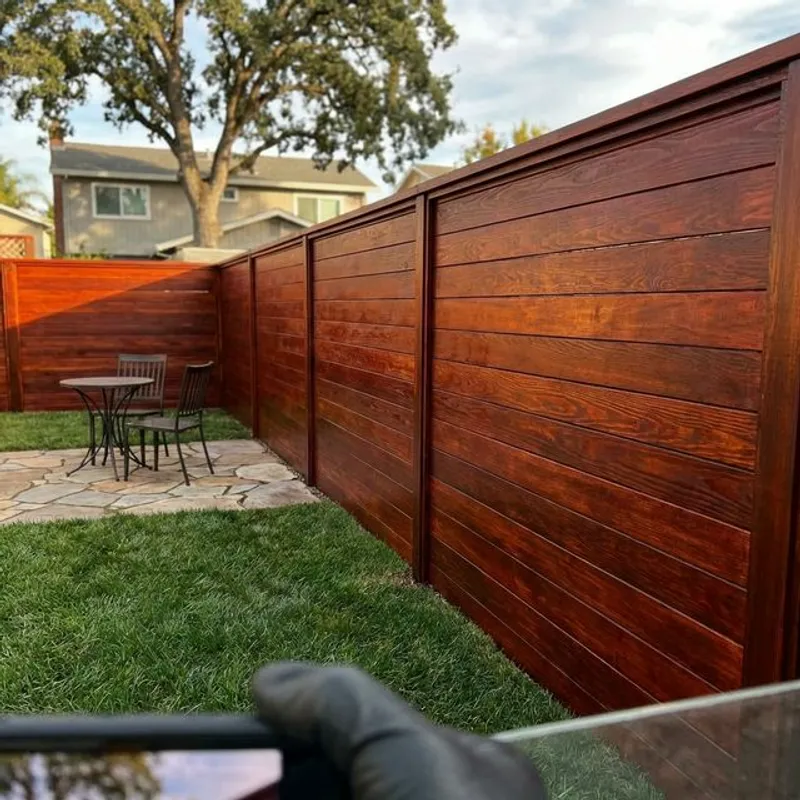
Why Bakersfield Quality Fences for Staining and Sealing
Product selection and application quality determine how long a stain job lasts. Here is how we approach each project.
Climate-Matched Product Selection
Bakersfield's combination of intense UV, low humidity, and wide temperature swings requires stain products formulated for those conditions. We use penetrating oil-based and water-based stains with documented UV inhibitor ratings rather than generic deck stains that may not be rated for extended direct sun exposure. Product selection is matched to the wood species and condition.
Surface Prep Before Application
We clean and prepare all surfaces before applying any stain or sealer. Wood that has not been properly prepped will show the difference within a year — the stain will lift, blotch, or peel in areas where the surface was not clean and absorbent at the time of application. Skipping prep to save time is the most common cause of early stain failure.
Moisture Content Verification
Applying stain to wood with high moisture content is a common installation mistake that causes adhesion failure. We check moisture levels before applying product and will delay application if the wood is not dry enough to accept the stain. This is especially relevant after Bakersfield's winter rain season when fence boards can retain moisture longer than expected.
Even Coverage Without Lapping
Stain applied unevenly — too thick in some areas and missing in others — creates a blotchy appearance and uneven protection. We apply product with consistent coverage across the full fence surface, working in sections to avoid lapping marks at board edges and maintaining wet edges throughout the application.
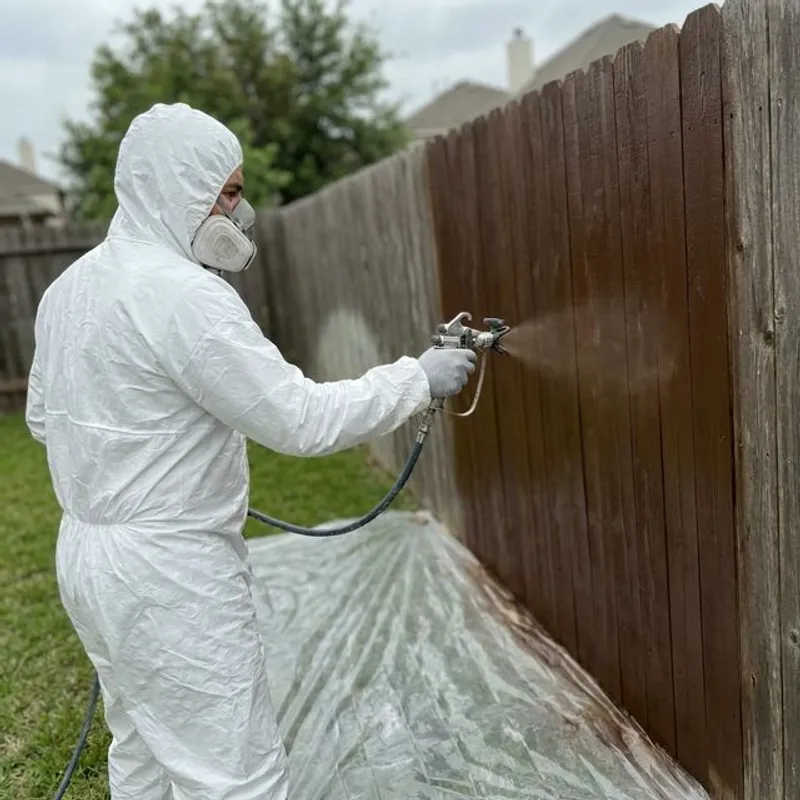
Solid Color Staining
Solid color stains provide the highest level of UV protection because the pigment load blocks UV rays from reaching the wood surface. They are a good choice for fences with significant weathering or uneven wood color where a natural-tone semi-transparent stain would not hide the variation. Solid stains require more thorough prep and are harder to recoat without stripping than semi-transparent products, but they deliver excellent protection in high-sun environments like Bakersfield.
Semi-Transparent Natural Tones
Semi-transparent stains allow the wood grain to remain visible while providing UV protection and moisture resistance. They are the preferred choice for new cedar and redwood fences where the natural appearance is part of the aesthetic. Products in this category vary significantly in UV protection level — we specify formulations appropriate for the exposure conditions at each property rather than using the same product everywhere regardless of sun intensity.
Clear Sealer Application
Clear sealers protect against moisture intrusion and surface checking without adding color. They are a good choice for homeowners who want to maintain the natural gray patina of weathered wood while preventing further structural degradation. Clear sealers provide less UV protection than pigmented stains and require more frequent reapplication, but they are appropriate for specific aesthetic goals and for fences in partially shaded locations where UV load is lower.
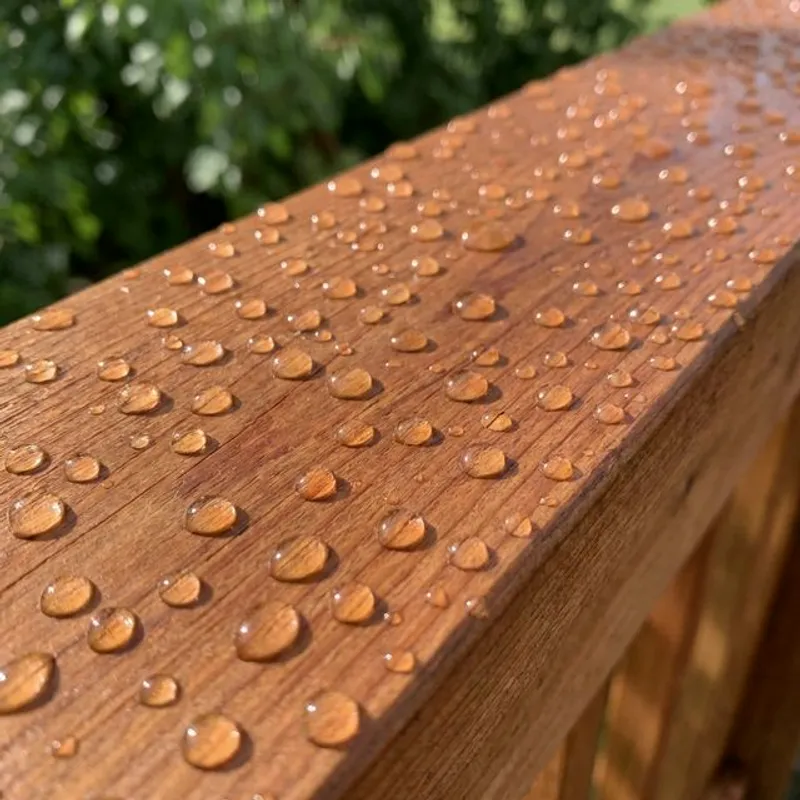
Fence Staining and Sealing Process
Surface Cleaning and Inspection
We clean the fence surface with a wood cleaner and, where needed, a brightener that removes oxidation and raises the grain for better stain absorption. During cleaning, we inspect the fence for any structural issues — loose boards, failed nails, or damaged sections — that should be addressed before staining. Staining over structural problems is not an effective fix and wastes the product applied.
Moisture Check and Drying
After cleaning, the fence must dry to an appropriate moisture level before stain is applied. In Bakersfield's dry climate, this typically takes 24 to 48 hours after cleaning depending on the weather and the initial moisture content of the wood. We check moisture with a meter before starting application to confirm the wood is ready to accept the stain.
Stain or Sealer Application
Product is applied by brush, roller, or sprayer depending on the fence style and surface texture. Brushing and rolling provide better penetration on rough-sawn and weathered surfaces. Spraying is efficient on smooth surfaces but requires careful masking of adjacent plants, hardscape, and structures. We apply product in sections, maintaining wet edges and working top to bottom to avoid running stain onto already-dried surfaces.
Drying Review and Care Guidance
We inspect the finished application for even coverage, missed areas, and lapping before leaving the site. Any deficiencies are addressed before the stain dries completely. We provide you with the product name and specification, the recommended maintenance interval for your specific exposure conditions, and guidance on what to look for when the fence is due for retreatment.
Fence Staining and Sealing FAQs
How often does a wood fence need to be stained in Bakersfield?
Can you stain a fence that has never been treated before?
What is the difference between stain and sealer?
Do I need to stain both sides of the fence?
Can staining fix a fence that is already checking or cracking?
Ready to Start Your Fence Staining and Sealing Project?
Get a detailed estimate for your fence staining and sealing project in Bakersfield. No pressure, no obligations — just a straight answer on scope, timeline, and cost.