
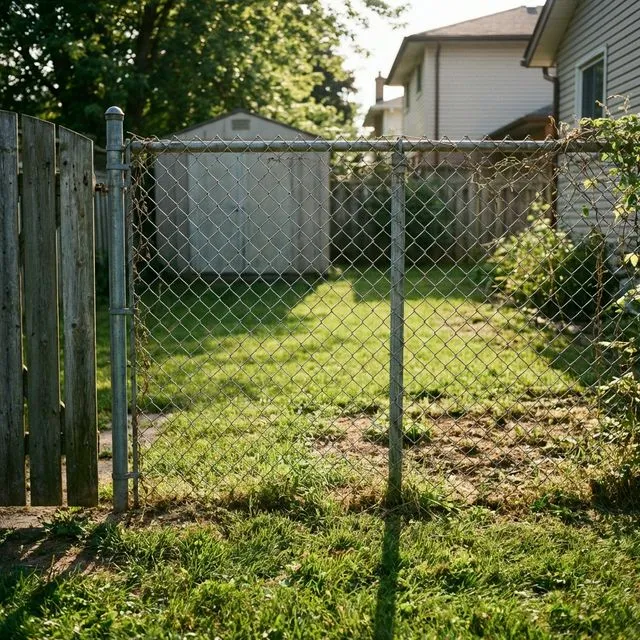
Ranch and Farm Fencing in Bakersfield, CA
Bakersfield Quality Fences Agricultural fencing in Kern County requires practical materials, functional layouts, and installation that holds up on large acreage without requiring constant maintenance. Livestock containment, pasture division, property boundary demarcation, and equipment area separation all have different requirements — and the right fence for each application depends on the animals involved, the terrain, and the budget for materials and long-term upkeep. We install ranch and farm fence systems for properties throughout the Bakersfield area and the broader San Joaquin Valley.
If you are planning a new pasture layout, replacing aging perimeter fencing, or adding livestock containment to an agricultural property, call or request a quote. We can assess the site, discuss material options by intended use, and provide a realistic estimate for the scope.
Ranch and Farm Fence Installation Services in Kern County
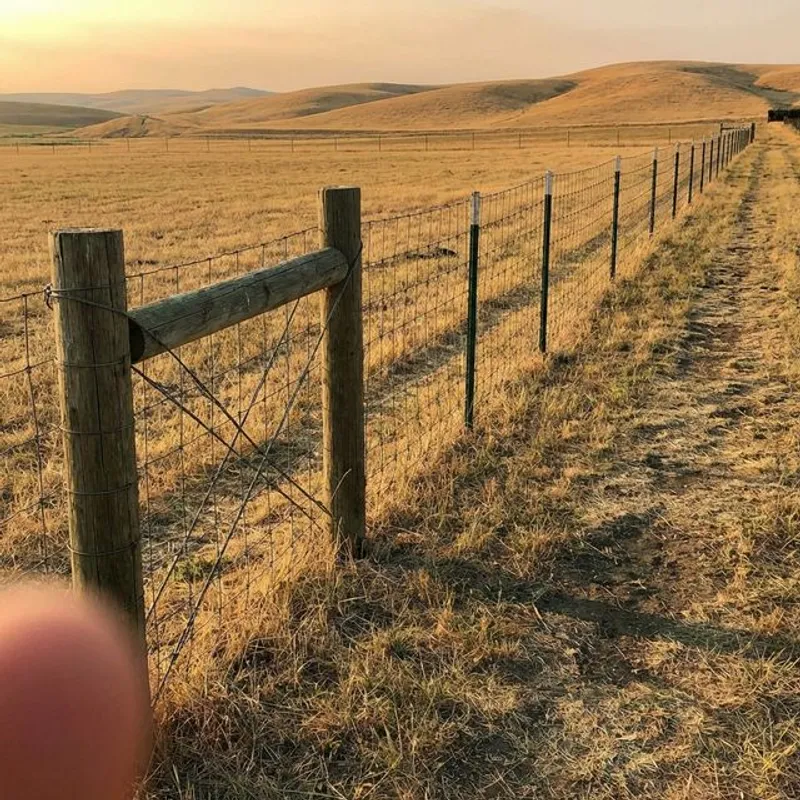
Agricultural fencing covers a wide range of applications and materials. Field fence and no-climb wire are the standard for livestock containment on cattle and horse operations. Barbed wire is used on larger acreage boundary fencing where cost per linear foot is the primary constraint. High-tensile wire systems are popular on larger properties because they require fewer posts per run and can cover significant acreage efficiently. Pipe and cable fencing is the premium choice for equine properties where horse safety is the priority — no sharp edges, no wire to catch a hoof.
Kern County's agricultural properties range from small hobby farms to large commercial operations, and the fence installation needs vary accordingly. A five-acre horse property needs different materials and gate configurations than a 200-acre cattle operation. We assess the specific livestock type, the pasture layout goals, and the terrain before recommending materials — generic agricultural fencing recommendations that do not account for the specific animals and site conditions often result in systems that either fail to contain livestock or cost significantly more than necessary.
Livestock Containment Fencing
Cattle and horse containment requires fence heights and wire configurations appropriate for the specific animal. Cattle are generally contained by four-strand barbed wire or field fence at appropriate heights. Horses require no-climb field fence or pipe and cable to prevent leg entanglement — barbed wire is not appropriate for horse containment. We recommend wire type and height based on the animals being contained and install with post spacing and tensioning appropriate for the expected pressure the livestock will put on the fence.
Pasture Division and Cross-Fencing
Rotational grazing and pasture management require cross-fencing to divide larger pastures into manageable sections. Cross-fence layouts need to account for livestock movement patterns, water source locations, and gate placement for equipment access. We plan cross-fence layouts that function practically for the grazing management system rather than just dividing the property geometrically. High-tensile wire with step-in posts is a cost-effective option for interior cross-fencing that needs to be reconfigured seasonally.
Property Boundary Fencing
Large agricultural property boundaries are typically fenced with barbed wire or high-tensile wire systems because the cost per linear foot must stay manageable over hundreds or thousands of feet. Post spacing on boundary fencing can be wider than on containment fencing, reducing material cost without compromising the boundary definition function. Corner and brace assemblies are critical on long boundary fence runs because they carry the entire wire tension across the span — undersized bracing is the most common cause of boundary fence failure.
Why Bakersfield Quality Fences for Ranch and Farm Fencing
Agricultural fencing covers large areas and needs to function reliably without constant attention. Here is what we focus on to deliver that.
Animal-Specific Material Recommendations
The right fence for cattle is wrong for horses, and the right fence for horses is overkill for a goat enclosure. We match fence type and configuration to the specific animals being contained, which prevents both containment failures and unnecessary material expense on over-engineered systems.
Correct Corner and Brace Assembly
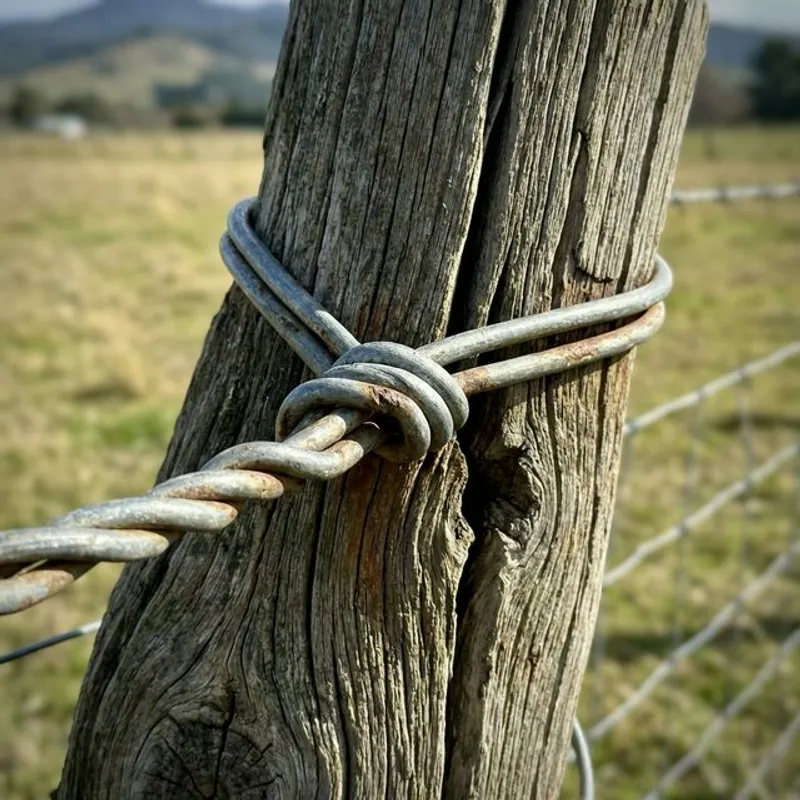
Corner and brace assemblies are the structural anchors of any wire fence system — they carry the tension that keeps the wire tight across the entire run. Undersized or improperly constructed bracing is the most common cause of long-run wire fence failure. We build corner assemblies to dimensions appropriate for the wire type and run length.
Gate Placement for Operations
Agricultural gates need to be placed where they serve actual operational flow — tractor and equipment access, livestock movement between pastures, and perimeter entry points. We discuss operational requirements during the site assessment rather than placing gates where the fence geometry is most convenient for installation.
Efficient Large-Acreage Installation
Large agricultural fence projects require logistics planning — material staging, equipment access on rough terrain, and efficient post-setting sequencing — to complete on schedule and within budget. We have the equipment and crew capacity to handle large-footprint agricultural projects without the timeline extensions that come from crews working beyond their normal residential scope.
Equine Property Fencing
Horse properties require materials that eliminate injury risk while providing effective containment. Pipe and cable fencing — steel pipe posts with smooth cable rails — is the premium choice for horse operations because it eliminates sharp edges, wire cut risks, and entanglement hazards. No-climb field fence with board or pipe toppers is a cost-effective alternative that provides good containment and reduced injury risk. We can walk through the trade-offs between pipe, no-climb wire, and high-tensile options for your specific horse operation.
Heavy-Duty Agricultural Gates
Farm and ranch gates need to pass tractors, trucks, trailers, and livestock. We install tube-steel ranch gates in standard 12, 14, and 16-foot widths, with posts set in concrete footings sized for the gate weight and swing load. Gate hardware is selected for outdoor agricultural use — heavy-duty chain catches, weld-on hinges, and padlock capabilities. Double-swing configurations are available for wider equipment access points.
Fence Line Clearing
Agricultural fence installations on undeveloped or overgrown fence lines require clearing brush, regrading along the fence path, and removing old wire and posts before new installation can begin. We handle fence line clearing as part of the installation scope rather than requiring the landowner to prepare the site separately. In areas with existing buried wire or old concrete footings, we identify and address those obstacles as part of the pre-installation work.
Ranch and Farm Fence Installation Process
Site Assessment and Layout Planning
We walk the fence line with you, identify terrain features that affect installation — washes, hardpan, rock, and grade changes — and discuss gate placement for your operational requirements. Material recommendations are made during this visit based on the livestock type, terrain, and budget. For large perimeter projects, we GPS-map the fence line to confirm linear footage and identify any title or survey issues before work begins.
Fence Line Clearing and Post Layout
Vegetation along the fence line is cleared to allow post setting and wire installation. End, corner, and brace posts are set first because they are the structural anchors of the wire tension system. Line post positions are marked at the appropriate spacing for the wire or panel type being installed — tighter spacing for livestock containment, wider spacing for boundary fencing.
Post Installation and Wire Tensioning
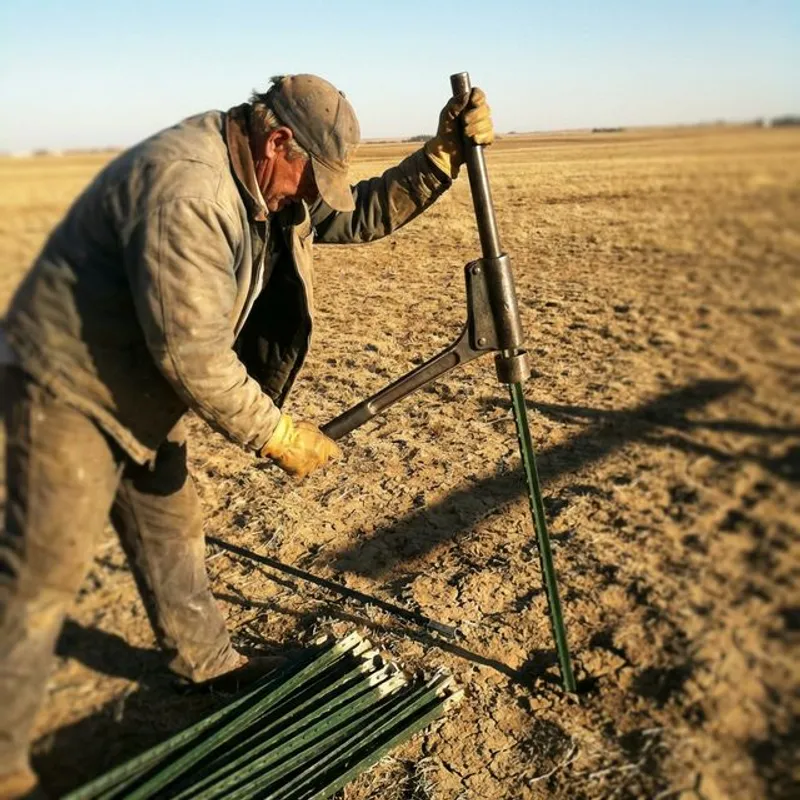
Posts are driven or set in concrete depending on soil type and fence application. Sandy or loose soils require concrete; compacted hardpan may allow driven posts. Corner and brace assemblies are completed and verified for structural integrity before wire is tensioned. Wire is unrolled and attached to the starting terminal, tensioned across the full run, and secured at the opposite end before intermediate stapling or clipping.
Gate Placement and Final Inspection
Gates are installed at the pre-planned locations with posts set for the specific gate width and weight. We walk the completed fence line for wire tension consistency, post plumb, and gate operation before final sign-off. Any low spots or tension inconsistencies are corrected during this walkthrough rather than left for the client to discover after we leave.
Ranch and Farm Fencing FAQs
What type of fencing works best for horses?
How much does agricultural fencing cost per linear foot?
Can you install fencing on rough or sloped terrain?
How wide should agricultural gates be?
Do you handle large acreage perimeter fencing?
Ready to Start Your Ranch and Farm Fencing Project?
Get a detailed estimate for your ranch and farm fencing project in Bakersfield. No pressure, no obligations — just a straight answer on scope, timeline, and cost.