
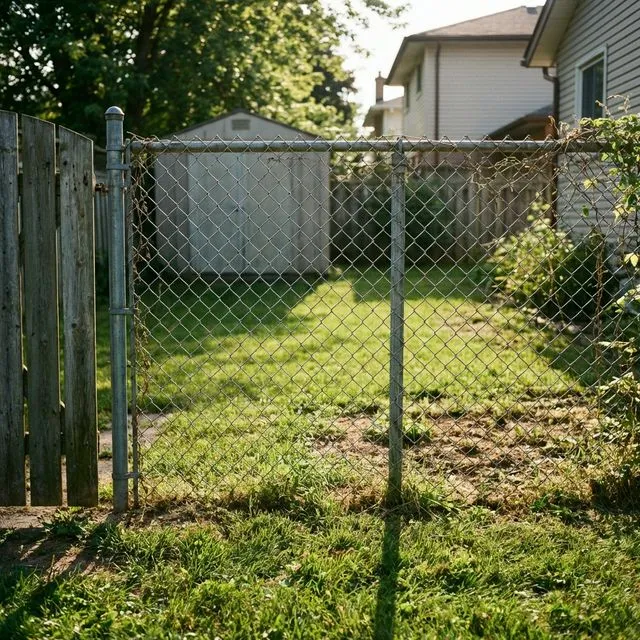
Chain Link Fence Installation in Bakersfield, CA
Bakersfield Quality Fences Chain link is a dependable, cost-effective fencing solution for residential, commercial, and agricultural properties throughout Bakersfield and Kern County. When the fabric tension is correct and the framework is properly sized, chain link performs for decades without significant maintenance. We install galvanized and vinyl-coated chain link systems at heights from 4 to 12 feet, with gate configurations built for residential side yards up to full commercial vehicle access points.
Whether you need a basic yard enclosure, a secure perimeter for a business, or a dog run that will actually contain your animals, we size the system for the job and install it to last. Call or request a quote online and we will schedule a site visit.
Chain Link Fence Installation for Residential and Commercial Properties
Chain link fencing is often the right answer when the priority is reliable containment and perimeter definition without the visual weight of a solid fence. The open fabric allows airflow and visibility, which matters for properties where sightlines and ventilation are practical considerations — contractor yards, school perimeters, dog runs, and agricultural boundaries are all common chain link applications. We install systems using properly sized terminal, corner, and line posts with appropriate top rail and tension wire for each run length and height.
The difference between a chain link fence that looks solid after five years and one that has sagged and gone slack comes down to installation precision — specifically fabric tension and post sizing. Undertensioned fabric will loosen over time, creating the characteristic wavy, drooping appearance of a poorly installed chain link fence. We stretch fabric consistently and use the correct brace assemblies at corners and gates so the tension holds across the full run. For commercial and high-security applications, we can specify heavier gauge mesh, anti-climb extensions, and reinforced gate hardware.
Galvanized Steel Systems
Hot-dipped galvanized chain link is the standard for residential and commercial installations that need long-term corrosion resistance without the added cost of coating. The zinc layer bonds to the steel wire and forms a durable barrier against rust even in Bakersfield's occasional wet winters. We use galvanized mesh, posts, top rail, and hardware throughout these installations for consistent performance across every component in the system. Galvanized chain link is the workhorse option for most practical fencing applications.
Vinyl-Coated Chain Link
Black and dark green vinyl-coated chain link is the preferred aesthetic choice for residential properties, schools, and commercial facilities where appearance is a consideration. The vinyl coating adds a secondary layer of corrosion protection over the galvanized core wire and gives the fence a cleaner, less industrial appearance. Black-coated chain link in particular tends to visually recede into landscaping backgrounds, making it a popular choice for homeowners who want security without an obtrusive fence presence.
Privacy Slat Integration
Chain link privacy slats thread through the mesh fabric to reduce visibility without replacing the entire fence system. They are available in a range of colors and provide 75 to 95 percent privacy coverage depending on the slat style and weave angle. This is a practical solution for existing chain link fences where the homeowner wants more screening, or for new installations where privacy is a secondary goal alongside containment and security. Slats can be added at installation or retrofitted to an existing fence.
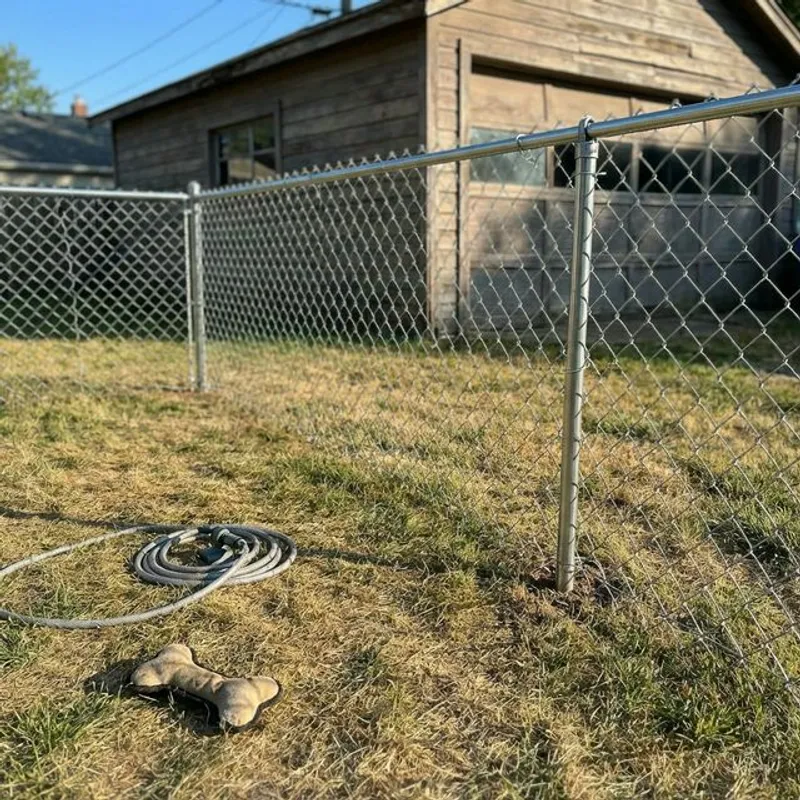
Why Bakersfield Quality Fences for Chain Link Installation
Chain link looks straightforward, but consistent fabric tension and correct post sizing make the difference between a fence that holds up and one that needs repairs within a few years.
Consistent Fabric Tension
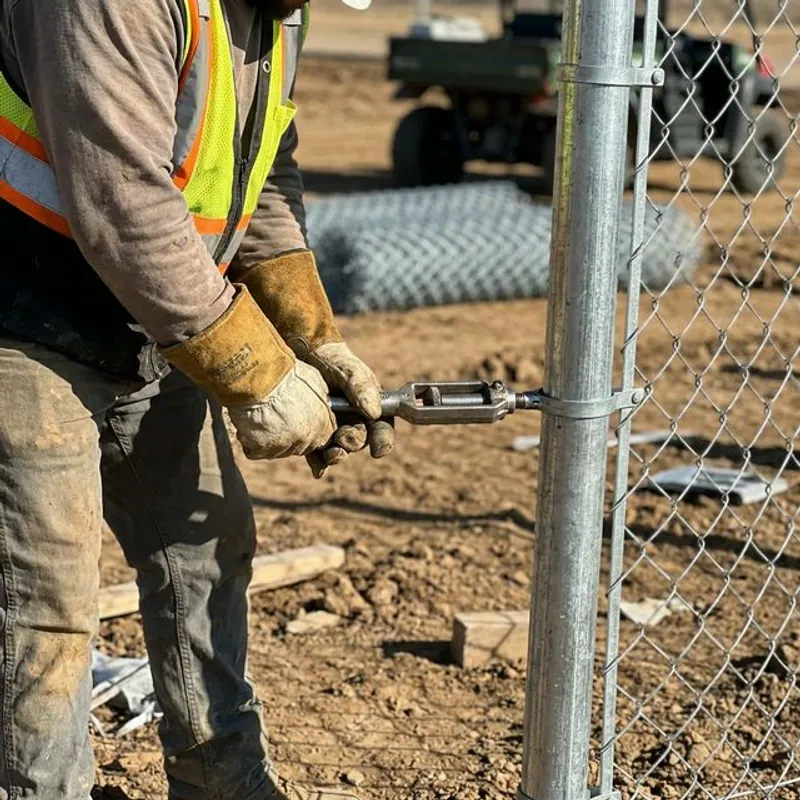
Fabric tension is the most important factor in chain link longevity. We use tension bars and puller systems to stretch the mesh evenly across each bay and secure it at the correct tension before moving to the next section. Correctly tensioned fabric holds its shape for years; undertensioned fabric begins sagging quickly and is much harder to correct after the fact.
Correctly Sized Framework
Post diameter and rail size must be matched to fence height and run length. A 6-foot commercial fence uses heavier posts than a 4-foot residential run. We select framework components using industry-standard sizing tables rather than using the lightest material that technically works. Undersized framework is the most common cause of long-term deflection in chain link installations.
Commercial-Grade Gate Hardware
Chain link gates get used hard — especially on commercial sites and properties with working dogs. We use fork latch hardware, heavy-duty hinges, and gate frames built from larger-diameter pipe than the fence posts themselves. Gates need to carry their own weight without transferring load back to the fence fabric, and that requires building them to a higher standard than the surrounding fence.
Accurate Layout Planning
Gate placement decisions made without a proper layout can lead to awkward fence lines or post conflicts with existing structures and utilities. We plan gate locations, post spacing, and brace positions before any digging begins, so the finished fence functions the way the property needs it to and the post layout does not require field modifications that compromise the design.
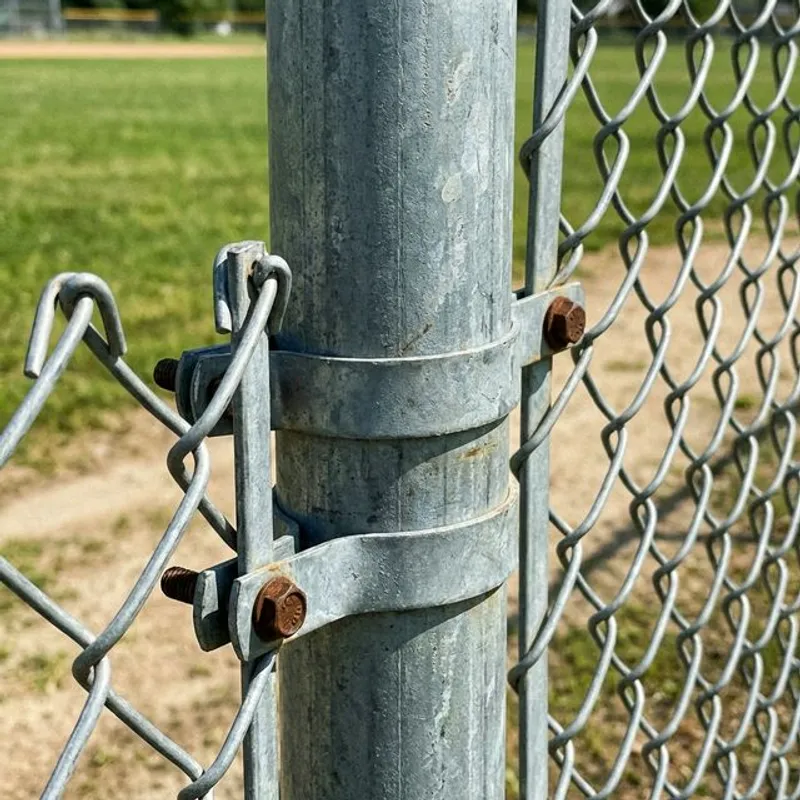
Security Topping Options
For properties that need a stronger deterrent, we install barbed wire arms, razor ribbon, and anti-climb mesh extensions at the top of chain link fences. These are common in commercial and industrial settings where perimeter security is a priority. Installation must account for local ordinances — some Bakersfield zones have restrictions on barbed wire at certain heights or in residential areas — and we confirm compliance before specifying any security topping.
Drive-Through Gate Systems
Commercial properties and contractor yards often need wide swing gates or rolling slide gates to accommodate trucks, trailers, and equipment. We design and install these gate systems with posts sized for the gate span and weight, slide gate tracks that are properly anchored, and locking hardware built for commercial use. For high-cycle installations, we can also integrate with automatic operator systems.
Repair and Re-Tensioning
Existing chain link fences that have gone slack, developed bent posts, or have damaged fabric sections can often be repaired rather than replaced. We assess the framework condition, identify the failure points, and re-tension or replace components as needed. Partial fabric replacement with matching gauge and weave is straightforward on most installations. Post replacement in concrete is more involved but typically still more cost-effective than full fence replacement.
Chain Link Fence Installation Process
Layout and Gate Planning
We walk the fence line, identify gate locations, and mark terminal post positions at all corners, ends, and gate frames. Terminal posts carry the highest structural load in a chain link system — they anchor the fabric tension and gate weight — so their position and footing specification drive the entire installation plan. Utility locations are identified and marked before any excavation begins.
Post Setting
Terminal, corner, and gate posts are set in concrete first, followed by line posts at the appropriate interval for the fence height. Post plumb is critical because the top rail and fabric tension depend on a consistent post alignment across the run. We allow concrete to cure before tensioning fabric — pulling tension against partially cured concrete can shift posts and throw the alignment off.
Rail and Fabric Installation
Top rail is connected through the post loop caps and runs continuously across each bay. Tension wire is installed at the bottom of the fabric run for fences without a bottom rail. The chain link fabric is unrolled along the fence line, attached to the terminal post with a tension bar, and pulled with a come-along or puller until the correct tension is achieved across the full width before securing to the opposite terminal.
Gate Installation and Final Check
Gate frames are assembled and hung last so the post positions can be confirmed against the actual opening width. Hinges are set at the correct height for the gate weight, and the latch is positioned for positive engagement without binding. Fabric is attached to the gate frame, and the gate swing and latch function are tested before the job is considered complete.
Chain Link Fence Installation FAQs
How long does chain link fencing last?
Can chain link be installed on sloped ground?
What gauge chain link should I use?
Is chain link allowed in residential zones in Bakersfield?
Can you add privacy to an existing chain link fence?
Ready to Start Your Chain Link Fence Installation Project?
Get a detailed estimate for your chain link fence installation project in Bakersfield. No pressure, no obligations — just a straight answer on scope, timeline, and cost.